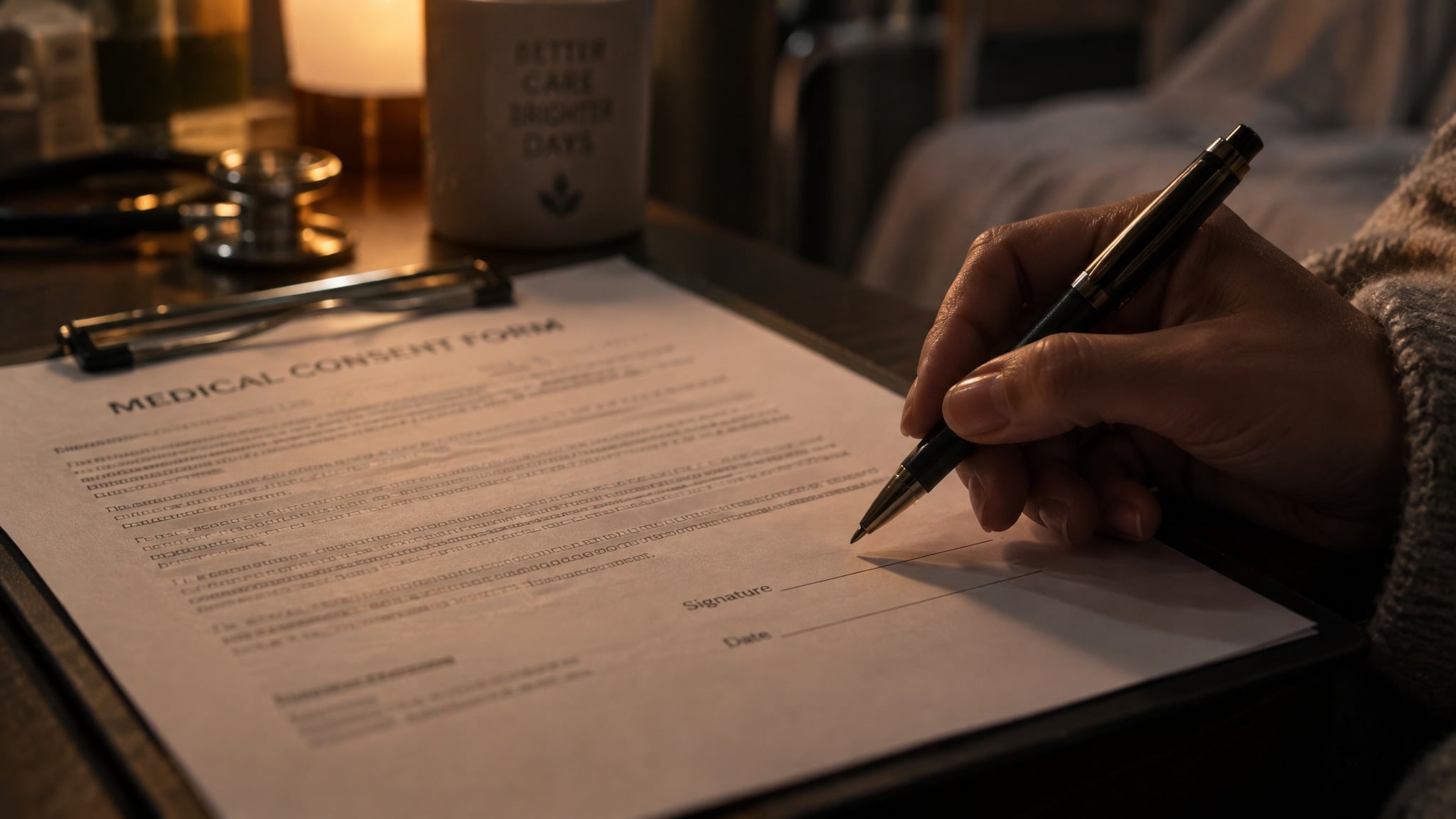
You sign the consent form in the surgeon's office. It's usually four pages. Sometimes five. The font is small. The language is clinical. You're nervous, excited, ready. You sign it and move on.
Here's what that form typically says: there are risks of infection, bleeding, scarring, changes in nipple sensation, and capsular contracture. It mentions that implants are not lifetime devices. It says you may need additional surgery.
Here's what it doesn't say.
It doesn't tell you that capsular contracture affects somewhere between 10% and 20% of women with breast implants, depending on the study and the type of implant. It doesn't tell you that textured implants — the ones many surgeons preferred because they "stay in place better" — have been linked to a rare but real cancer called BIA-ALCL (breast implant-associated anaplastic large cell lymphoma). The FDA issued a recall of certain textured implants in 2019, but many women who already had them were never contacted.
It doesn't talk about Breast Implant Illness.
BII isn't an official medical diagnosis. It doesn't have a billing code. Many doctors don't recognize it. But thousands of women report the same cluster of symptoms after getting implants: chronic fatigue, joint pain, brain fog, anxiety, hair loss, skin rashes, and autoimmune-like responses. The medical establishment is split — some surgeons acknowledge it, others dismiss it as psychosomatic. What nobody disputes is that many women feel dramatically better after their implants are removed. That's not nothing.
The consent form doesn't tell you about the financial reality of complications.
If your implants cause problems, the solution is surgery. Explant surgery — removing the implant and usually the surrounding capsule — costs between $5,000 and $12,000 depending on complexity and location. Insurance almost never covers it because the original procedure was classified as cosmetic. That classification follows you. It doesn't matter that your body is fighting an infection or rejecting a foreign object. If it went in as cosmetic, it comes out as cosmetic.
The consent form doesn't tell you that the surgeon who placed your implants may not be the right person to remove them.
Explant surgery is a different skill set. Many plastic surgeons who routinely place implants don't perform en bloc capsulectomy — the full removal of the implant and its surrounding capsule as one unit, which many explant specialists recommend. Finding a qualified explant surgeon often means traveling to another city. That's an additional cost.
The consent form doesn't tell you that you might feel alone.
Women with implant complications often describe the same thing: they feel dismissed. By their surgeons, who minimize the symptoms. By their insurance companies, who deny the claims. By friends and family, who don't understand why a "cosmetic" issue is causing so much pain.
This isn't an anti-implant piece. Millions of women have breast implants and are perfectly fine. But the women who aren't fine deserve better than a four-page form and a "good luck."
They deserve honest information before they sign. And honest help when things go wrong.
That's what this platform is for.